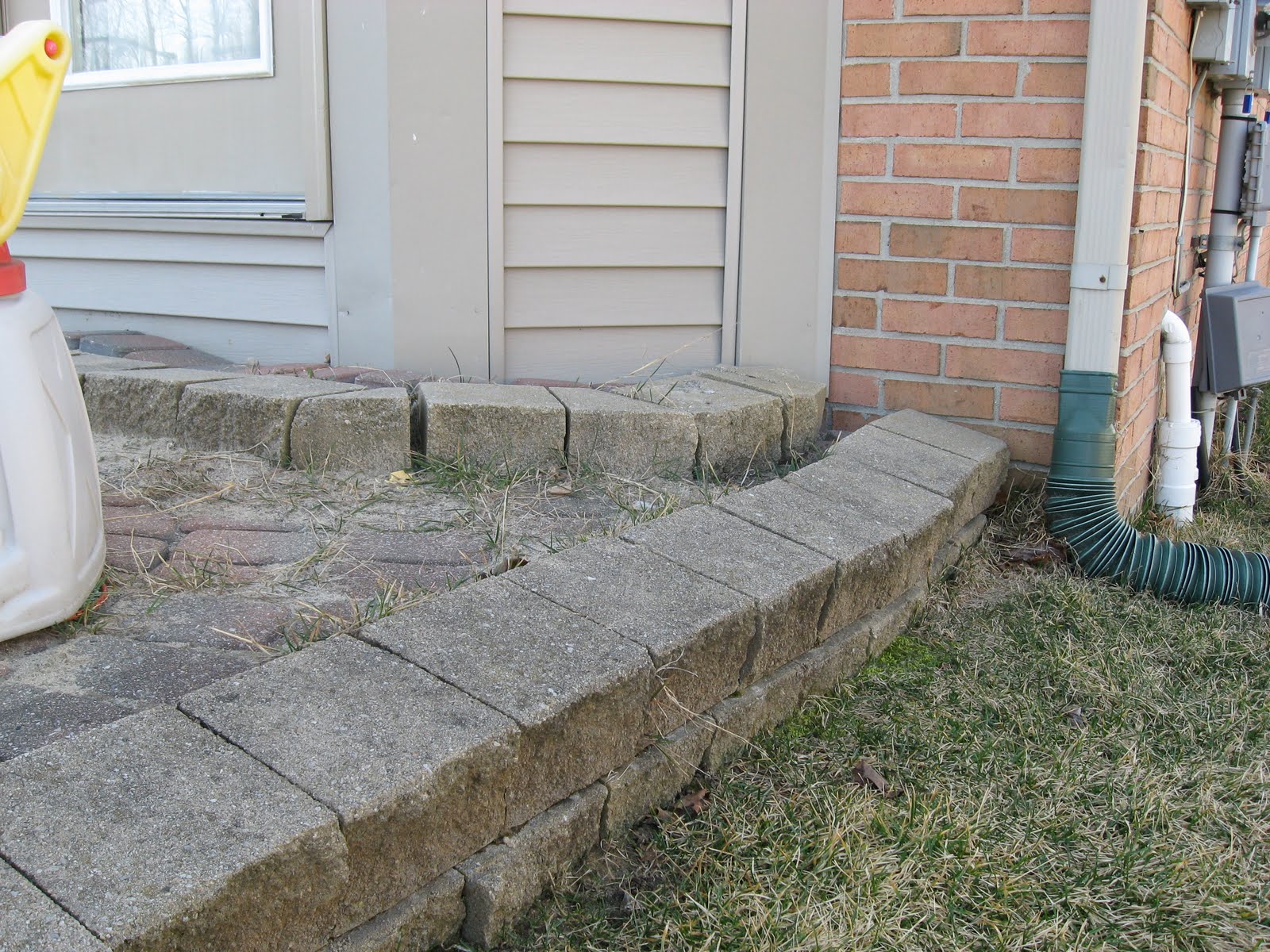
Jun 20, 2010

Anatomy of a Raised Brick Paver Patio

I am very select in the brick paver installation projects that I will perform in a given year. I will not bid on every brick paver patio, walkway, driveway lead that I am contacted on. I am not interested in bidding against inferior brick paver installers like landscapers who cut corners, create poor designs, and do not pay attention to custom detail. Customers who seek brick paver excellence and education are the clients I seek to service.

This paver patio project was beneficial to both the homeowner and myself because we were on the same page throughout this paver patio project. I feel this is the best method of installing a brick pavers project that insures a successful business arrangement between client & contractor.

This client had an open schedule, had researched the product and new what they wanted, and had budgeted from installations we had performed for family & friends. After I made some crucial recommendation to the paver patio size and layout, the brick paver installation commenced. We used UNILOCK's Stonehenge 3 shape brick pavers and Roman Pisa wall & caps to construct the raised patio frame & step.

Here is the "Anatomy of a Raised Brick Paver Patio" that we installed for this client. Performing basic brick paver and modular retaining wall techniques will insure the long-term success and beauty of this raised paver patio.  Enjoy this picture time line and I hope it helps educate homeowners and brick paver contractors a like.

The customer had a patio stone patio laid on an inch or two of sand. This was a temporary patio until they could reach their budget for the "real" paver patio they desired! As you can see, the patio size did not facilitate the patio furniture and grill.  We began by removing the patio stones, temporary cinder block steps, and removed the sod where the new raised patio was to be installed. We removed 10-12" more of the sod on the outside of the expected paver patio.

We started by shooting heights for the paver patio by using one of the most important tools for any brick paver contractor..the transit level.  We then dug our trench for the modular retaining wall blocks. These Unilock blocks are 12" deep so we dug the trench 20" wide (4" either way) and dug deep enough to install 6" of compacted gravel under the blocks. The retaining wall block trench then was filled and compacted with 1" down to fines crushed gravel.


The compacted gravel was then screeded and set to the height needed to set the modular retaining wall blocks & caps to the finished height of the paving stones of the patio. The radius and gapping of the blocks were set to best fit the limitations of the product and the objectives of the paver patio design. It is best to merge the restrictions of the products and objectives of the design to best maximize the appearance of the final product.

Filter fabric (geo-textile blanket) is installed under paver base material and behind wall blocks to limit filtration of sub soil into paver base and limit any washout through joints of wall blocks.


The gaps of the wall blocks are filled and compacted prior to capping. This also will help firm up the wall and give it some added strength and help from settling behind the wall.


  Wall caps were marked for diamond blade cuts and done uniformally to give the wall a finished look with no gaps.
This is a tedious task having to cut each cap in the radius but the finished look sets off the whole appearance of the paver patio giving it that rich coping look with a natural rock face.

Cutting with Diamond Blade saws is usually best done by a brick paver contractor. Many inexperienced paving contractors or homeowners use a guillotine cutter (hydraulic snap) or just plain out leave gaps for a poor finish look.

Once the modular retaining wall blocks & caps were installed for this raised paver patio, the entire area was filled with paver base material in 4-5" lifts. Each lift was raked level and compacted with a power plate compactor. Tight areas along the back of the wall blocks and house were completed by a hand tamper. This particular raised paver patio needed @ 8" (2 Lifts) of compacted paver base to allow for the bedding course & paving stone thickness.


It is important to make sure the paver base is compacted level. If compacted uneven or pitching back to the house, the results over the years will be a wavy and improper pitching paver surface. The top of the paver patio will mimics the base below over time. The compacted paver base is your foundation!
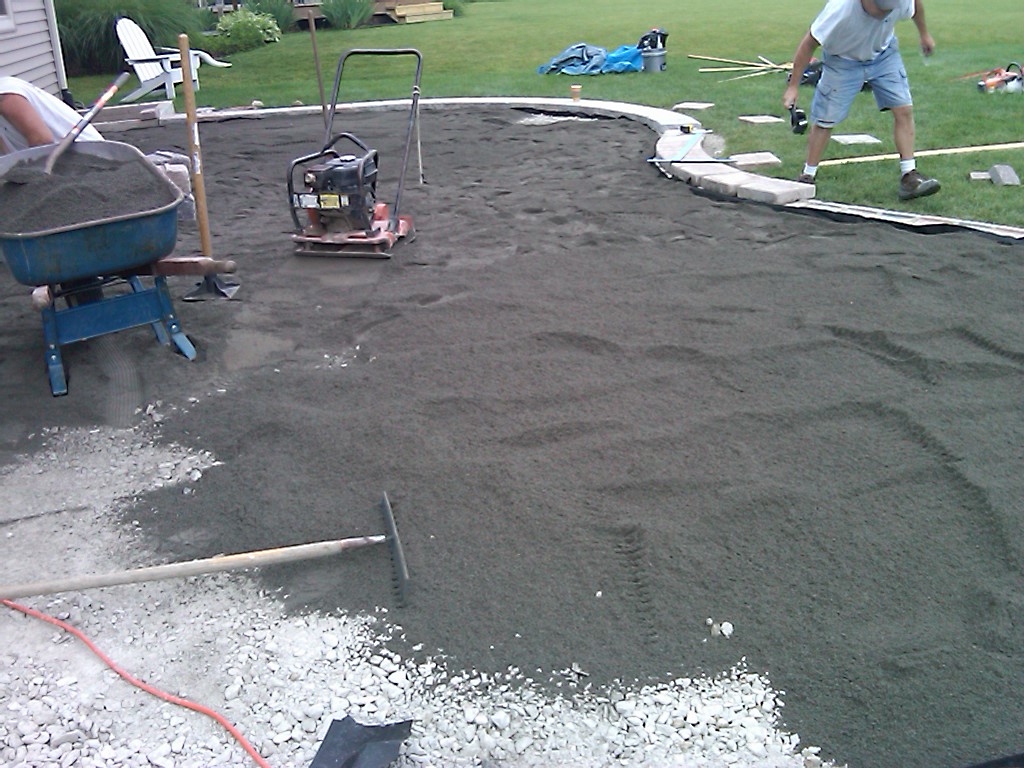


After the paver base material is correctly leveled and compacted, it is time to bring in the bedding course. The bedding course is the 1 to1 1/2" layer of screed that will be the layer of base for the interlocking pavers to "lock up" into. It is also the leveling course for the finished paving stone height. In Michigan, we use either 2NS Sand (similar to sharp sand) or 30A Slag Sand.


Here is where the real magic occurs for the experienced brick paver contractor....leveling the bedding course to prepare for the proper installation of the paving stones. The heights and pitches need to be correct to insure a well draining patio and appearance.  Screed poles, level transit, and patience are most during this stage. Done correctly, the laying of the paving stones will be simple and timely.


Due to the size of this paver patio, we decided to split the brick patio in half and screed one area, lay the paving stones, then screed the second half and finish laying the remaining paving stones. Screed poles which are no more than galvanized 10ft poles bought at a hardware store are suffice. We usually use 3 poles at a time to screed large areas.  The poles are reset and checked for height & pitch a few times before the final screeding takes place. After the final screed, the poles are carefully removed and the holes left are filled.


For areas that are tight or irregular, a keen eye and experienced "hand" screed is done with a mason's spatula.  Going in different directions so slightly will help insure holes or voids being filled. We will check these areas with small torpedo levels to insure proper pitch.


After we were satisfied that the screed was prepared for the laying of the paving stones, we began laying the interlocking brick pavers.  We discussed the best place to start the pattern to insure the best look of the paver patio.  We take in effect all sides of the patio and where best cuts should be performed.  Most inexperienced brick paver contractors just start laying and worry about the outcome at the end.  This can lead to a cut up or botched finish look.  Much like inside tile work, there is a thought process that needs to take place.

String lines are used periodically to insure that the laying pattern of the brick pavers is not "floating" or "veering off". It is amazing how dimensional paving stones will be off due to variances in the dimensions of the paving stones themselves.  If your brick paver installer is using string lines to level your pavers, you are in trouble!  String lines or more accurate in squaring off patterns or aligning borders.


Mixing from multiple paving stone bundles is a must to insure a good color mix.  Not all bundles of pavers or wall blocks are mixed evenly in color due to production lots.  If you do not mix, even within a bundle itself, your final paver patio may have an uneven quilt look of dark and light stones.  We always inspect the paver bundles prior to laying and discuss the strategy for grabbing the pavers & spotting.  It is best to mix the color shades while spotting so the brick paver layer can move quickly and not fuss with changing out paving stones.

After all the paving stones were laid in full pieces throughout this raised paver patio, the piecing of all openings takes place.  We cut all of our paving stones with a diamond blade and use both a chop saw and cut saw (fireman's saw).  It is important to set the brick paver cut in the opening and mark for cutting.  Cutting is an art for some. Some workers are a wizz and others struggle. That is what makes someone a carpenter and another a mechanic.  When ordering your product for a paver project, you should add upto 10% more to account for the loss of cuts that are not going to be usable.


We now give the entire brick paver patio an initial sweep of regular paver joint sand or polymeric sand.  Do not worry about filling every little joint as you will be doing a finish sweeping later. Make sure that the brick patio or paver joint sand is completely dry when sweeping.


 We then use the power plate compactor to set the interlocking pavers into the bedding course to achieve lateral "lock up" and set in our paver joint sand.  We went in several directions to insure proper lock up and followed up with the hand tamper in tight spaces where the plate compactor could not get into. After we are satisfied with the final compaction of pavers, we do the finish sweep with the paver joint sand, making sure we get all joints and nooks & crannies.


   Here is the finished patio! Another estactic and satisfied client by Brick Doctor Bill.  It was a pleasure working with a client who allowed us to work with the products benefits and now they will enjoy a patio for life. With proper yearly minor maintenance like sand sweeping and addressing any substantial settling due to frost damage, this raised paver patio will give years of enjoyment and neighbor envy. 


At the end of the job, I spent about 45 minutes educating the client on the paver maintenance requirements, options of polymeric sand or sealing, what to look out for to avoid future costly brick paver repairs, and how best to rub it in our your neighbor...lol.

I will return in the future to post great pics of the paver patio maturing and landscaping accents. I hope this pictorial was helpful in assuring a successful and long-term brick paver patio investment for you.  On to our next "house call" we go! 

Jun 12, 2010

A Paver Patio NOT installed by a Brick Paver Specialist

The other day I did a brick paver repair estimate for a paver patio in Ann Arbor. I immediately knew that this brick paver patio was NOT installed by a brick paver specialist. It was no surprise the client informed me that the Landscaper they hired installed this paving stone patio.

The first an foremost sign that an inexperience brick paver contractor installed this sub par paver patio is the absence of a soldier course row around the perimeter of the paver installation.  A soldier course row is usually the larger rectangular shape paving stones of the pattern, laid like a "row of soldiers", used to secure & frame the interlocking brick pavers.

The perimeter of most brick paver installations need a whole paving stone on the outside frame to better secure the diamond cut pieces of the pattern. Cut pieces will definitely sink or move if left on the outside edge of paving stones. Also, the paver edge restraint, whether plastic pvc or cement bead, will perform better.

The real advantage of "framing" your  brick pavers patio, walk, driveway, etc.. is the improved design appearance of the finished edges. Look all around your home for finished edges, tops, or bottoms, like trim molding, door & window jams, mason soldiers & ledges, and more. Not only are these "finished edges" functional but also ascetically pleasing. Your interlocking brick paver installation must have the same!

The second sign of this paver patio installation being installed by an inexperience landscaper is the rolling down of the paving stones on the outside edges. All too often, landscaping crews do not prep far enough out from the outside edges of the interlocking brick pavers.  Therefore, the outside edges will settle or "roll down" from the rest of the paving stones since the paver base material past the edges was not prepped or even installed.

For brick walkways, 4-5" minimum prep is needed past the edges of the interlocking pavers. Paver Patios minimum prep is 8"-10" and Paver Driveways 10-12" prep of base material past the edges of the paving stones. This will not only help prevent the ever noticeable edge "roll down" by inexperienced brick paver contractors but also give your paver edge restraint the proper base to be installed upon.

When getting estimates on your interlocking brick paver or retaining wall installations, make sure you do some research on the experience of the brick paver contractor you are hiring. Not all landscapers are inexperienced in installing paving stones, but a majority just add this service to their expanded repertoire.  Brick paver specialists and experts will perform all the major detail work and prep that will insure a long-term success of performance & appearance.

Jun 5, 2010

Small Paver Patio Repair after 5 Years Installed!

This past week in Ann Arbor, I did a small paver patio repair on a raised brick paver patio & brick walkway I installed 5 years ago. I am proud to see the results of this paver patio and the customer is as ecstatic today as the time we installed this project. The client had been frustrated with the constant upkeep & cost of a wooden deck. After years of substantial costs & sweat equity to maintain this wooden deck, the customer searched for a better solution.

The solution was a low maintenance modular retaining wall & paving stone constructed paver patio. I used UNILOCK's Pisa 2 retaining wall system to construct the paver patio frame and steps while laying Olde Greenwich Cobble as the paving stones.

This paver patio was installed in 2005 and after some severe winter climates and frosts in Michigan, it has remained intact and beautiful. The only repair needed was raising the paver soldier course along the back of the modular retaining wall caps. I talk about this paver repair in a previous post called "Top Brick Paver Repairs".

One of the major reasons that this raised paver patio and paver walkway has remained so beautiful and functional is due to the diligence of the homeowner. Each Spring they have swept in paver joint sand. A couple of years ago, they began using polymeric sand which not only aides in preventing weed & grass growth in the joints, it also helps prevent any erosion due to rain & snow. The homeowner also checked the modular retaining wall caps each Spring to make sure they were not loose. I had left them a caulking tube of Paver Bond adhesive so after my warranty they could keep them fastened.

After I completed this brick paver project, I took the time to educate the customer on the yearly maintenance requirements and the signs of possible future paver repair. I talk to them about the pros and cons of sealing pavers, what to do about the landscape around the paver installations, what not to leave on the paver patio in the winter, and when to contact me if certain areas begin to settle.

The most important tip that I gave this client was to contact me when there are signs of the paving stone soldier course settling along the back of the modular retaining wall caps on the raised paver patio area.  It took 5 years but they diligently did.  This $150 paver repair of the soldier course will protect this raised paver patio from excessively settling to avoid wall settling and a more costly repair.

The result of a proper brick paver installation & design, educating the homeowner,the homeowner performing simple maintenance, and a touch-up brick paver repair has been a beautiful & functional paver patio & walkway that this homeowner and contractor can appreciate. I am proud of this homeowner and more brick paver installations would remain this perfect if all involved would take pride in the effort and cost of paving stone installations.

May 20, 2010

Brick Paver Polymeric Sand for Paver Driveway

This past week in Ann Arbor we did a brick paver repair, cleaning, and polymeric sanding of a paver driveway. The paver repair was minor but we needed to do an aggressive cleaning of the pavers and paver joints. The customer complained he was experiencing weeds, grass, and excessive moss growth in their paver driveway.

The customer told me that they had the paver driveway installed about 5 years ago but they have not had any brick paver maintenance done. They have NOT swept in any paver joint sand since the paving stones have been installed!

Due to this neglect, the paver joints have been a breeding ground for the growth of weeds, grass, and moss.  The paving stones exhibited black soot and mold growth on the surface, thus inhibited the beauty and color of their interlocking pavers.

We started by spending over 6 hours aggressively power washing the paving stones and paver joints. We first made wet the paver driveway and agitated it with a stiff bristled brush and combination of water, bleach, and Oxy Clean solution. This special concoction helped cleaned the surface but power washing was necessary to completely deep clean the surface of the paving stones.

We then returned a couple of days later when all the paving stones and paver joints where dry so we could properly sweep in polymeric sand. In this particular paver driveway project, we used Pave Tech's SANDLOCK polymeric sand. We find this product to be durable and long lasting.

After vigorously sweeping the polymeric sand into the paver joints at a 45 degree angle, we use a simple leaf blower to blow off carefully the excess polymeric sand from the surface of the paving stones. It is important not to blow the polymeric sand out of the paver joints.

The final step is to wet the polymeric sand so the bonding of the polymers can begin. We began by gently misting all the paving stones and paver joints to begin the process. After lightly wetting the paver driveway, we gently misted paver areas so the polymeric sand was thoroughly soaked. We started at the highest point and worked our way down to the street, making sure that there is no run off or puddling. If there where any puddles, we used a simple wisk broom to remove excess puddled water.

When we completed the polymeric sand application, we instructed the homeowner to stay off the paver driveway for 24 hours to insure no tracking of the polymeric sand. The polymeric sand usually starts to harden after an hour but no need to push it.  Our customer was ecstatic with the results and I took the time to educate them on future brick paver maintenance to insure a less costly event.

May 13, 2010

Paver Repair and Installation #1 Tool

The number one tool in repairing or installing brick pavers and retaining walls is the simple "contractor's level" or "transit".  It amazes me how most landscapers and "wanna-be" brick paver installers do not utilize this amazing tool! It is a minimum requirement for installing or repairing interlocking brick pavers and modular retaining walls.

Brick paver patios, walkways, driveways, and retaining walls require some expertise in dealing with grades, slope, and pitch.  When properly used, this contractor's level or transit can solve a lot of these challenges with ease.  Landscapers and brick paver contractors who "eye ball" or use string lines with bubble levels are asking for trouble, which in turn, means trouble for the homeowner!

We are currently finished a brick paver patio repair in Saline where the center of the patio was installed 5" above the height of the basement walkout. The water pitched back to the house and water has seeped into the basement.  When the homeowner called the landscaper who installed the paver patio, their solution was to install a drain box at the doorwall to catch water flowing back towards the house.  ARE YOU KIDDING ME! Install the paver patio with a positive pitch!  The drain failed and because these homeowners were not the original owners who hired this so-called brick paver contractor, there was no warranty on the workmanship.

When installing a paver patio, the good rule of thumb is to achieve a 1inch pitch or slope per 10 ft to insure a perfect pitch without noticing the slope to the naked eye.  This pitch ratio is not etched in stone and factors may modify this parameter.  In the end, positive pitch is the minimum requirement for a good draining brick paver installation. Here you will see our finished paver patio with a new positive pitch out into the yard!

The contractor level or transit is the first tool a "real" brick paver contractor needs to use when installing a brick paver or retaining wall installation.  We also use it with most of our paver repairs so we can better solve our customers paver repair problems. It is usually the first item we set up on our interlocking paver installations, repairs, or patio replacements, well maybe second to setting down our lunch boxes & coffee thermos!

May 7, 2010

Paver Repair or Paver Installations ?

After 27 years in the interlocking brick paver and modular retaining wall industry, I have finally fine tuned the paver services that best fit my paver expertise and customer needs. So it begs the question, Do I perform paver repair or paver installations?

The largest customer need in this maturing brick paver industry is the need for brick paver repair, cleaning, sealing, replacement, and on going paver maintenanceBrick Doctor Bill's main focus is the fore mentioned customer needs. Ed Bryant, the owner of Unilock, Inc. told me 12 years ago that a maturing brick paver and retaining wall market will have a tremendous need for paver repair and maintenance services, much like, the maturing markets of wooden decks and cement work.

When the new housing market was booming, most of us brick paver contractors turned all our efforts & resources to installing paver patios, walkways, driveways, retaining walls, etc... at a tremendous rate.  All to often, the past customer needs for touch-ups or paver maintenance services where put off in an untimely manner or ignored by most brick paver contractors. I fear that when the housing market improves, that this much need niche will be ignored again.

Brick Doctor Bill is centered around the paver repair, replacement, clean & seal, and maintenance service that most customers desperately seek. This has been the fine tuning of my brick paver services the past 3 years.  It takes a brick paver expert & specialist to perform these services using updated & quality techniques that the prior brick paver contractor may have missed.  All paver repairs are NOT the result of poor paver installations.

Every day I am tempted with brick paver installation calls and requests.  It is very hard not to be tempted by doing a $10,000 installation job over a series of $500 paver repair jobs.  But I have to admit that the paver repair work is very rewarding for both the customer and myself.  When you install a larger paver patio in Ann Arbor, the anxiety of both customer (cost) and brick paver contractor (time & performance) can get the best of both of them.  I would briefly estimate in the past that about 20% of the time both the customer & contractor did not feel completely rewarded at the end of the paver project.  My experience with the paver repair business has been pretty much 100% customer & contractor satisfaction.

Due to the high demand for my paver installation services, I have limited the number of paver installations I perform in a year.  A brick paver installation that I will perform must be a good fit for both the customer and my business.

The most important aspect in a brick paver installation is to best meet the customer's needs & objectives. I must have a feel that this is a very necessary and functional need for the client and it is not "breaking the bank" because they must have.  Next, I must have some flexible control over the needed paver design to insure the proper use of interlocking pavers and modular retaining walls for long-term success & beauty!  Finally, I must be able to meet an acceptable time frame so that the customer needs will be met.  I am very upfront at the beginning about my schedule and expected time frame of starting.  These current parameters have made the limited number of paver installations I perform each year more rewarding for both the customer and myself.

One example of a brick paver installation request that I will not do and I get several times a year is "I need to fill this area in because I can not get grass to grow there!".  Brick Pavers is one of the more expensive pavements to install. Most often I  just instruct them to install mulch or stone mulch. Everyone wants brick pavers! but when the cost out weighs the benefits, it makes no sense to have them installed.

I also want to state that when it comes to Brick Doctor Bill selecting and performing brick paver or retaining wall installations, I do NOT just select "large" projects (over $10,000). In fact, I usually prefer mid-size (under $10,000) to small projects (as low as $500). Large paver projects tie up too much time & resources. Mid- size paver projects can be rewarding if both client and paver contractor are on the same page and function and beauty is at the top of that page.

The most rewarding work is the small paver or wall projects that range from $500 to $3,000. Much like my paver repair services, these seem to be the most satisfying for both the client and myself.  Usually a small project meets an immediate need and does not "break the bank" and I am easily able to complete this brick paver service in a timely manner.

So, when I am asked what type of work Brick Doctor Bill performs? My answer is the type of brick paver services that will best meet a customer's need and best fits the brick paver expertise I offer.  I continue with paver repair services and limited paver installations because it is a business model that works for Brick Doctor Bill and his clients!

Apr 25, 2010

Brick Paver Patio Cleaning

This past week we performed a brick paver patio repair, cleaning and polymeric sanding on a paving stone patio in Ann Arbor.  As you can see in this pic, the paver patio was in an extreme need of cleaning.  The abundance of moss was the direct result of moisture and shade.

We performed a brick paver repair by lowering the paver edge restraint that had raised from frost. The raised edge restraint was not only unsightly but it created a dam around the paver patio and did not allow water to run off the paving stones.  Therefore creating a lot of moisture on the paver patio and allowing moss to thrive combined with the shade in this area.

Reinstalling the plastic edge restraint is not easy. Grass & roots grow around the edge restraint and the spikes rust and make it very hard to remove.  We removed @18" of sod around the paver patio so the client could install enviro mulch or stone mulch. We reinstalled the paver edge restraint properly by making sure the top lip was at least 1" below the top edge of the paving stone border.

The cleaning of this paver patio required an aggressive approach to power washing.  We spent over 2 hours at a high PSI blowing out ALL the paver joints freeing them of dirt, moss, and weeds.  There is a need to be careful not to wash out the bedding course under the paving stones. This may result in paving stones sinking. After the paver joints where free of debris, we widen our spray nozzle and cleaned the individual paving stones to remove dirt, stains, and mold.

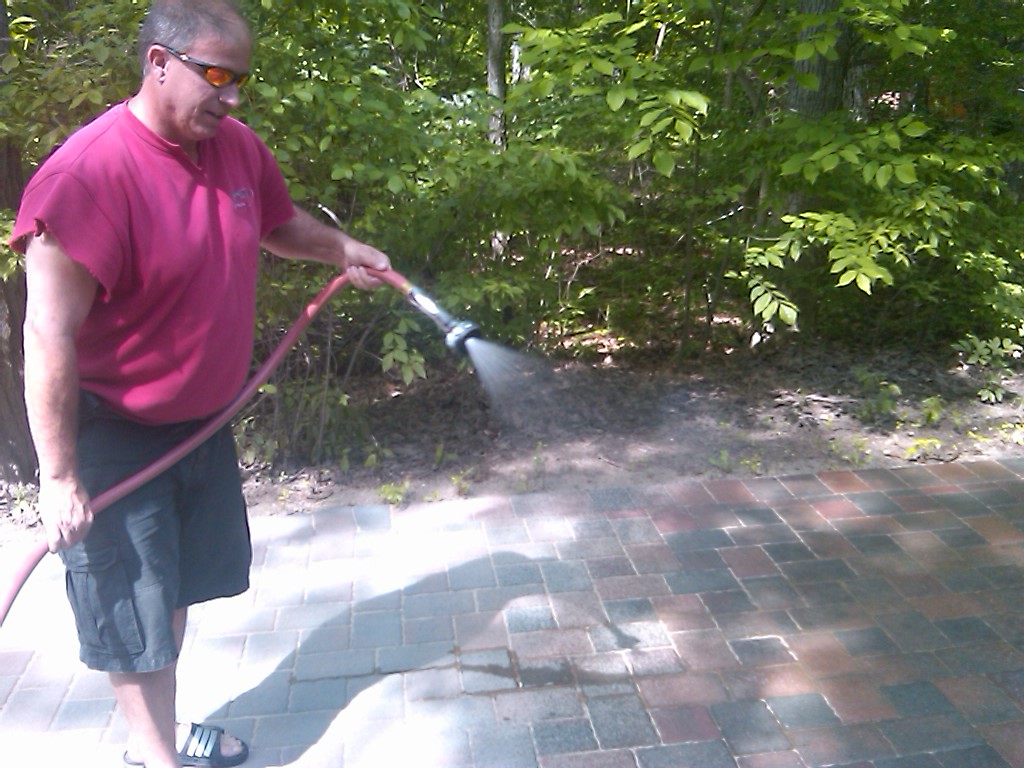
When the paving stones and paver joints were dry, we returned to sweep in polymeric sand in all the paver joints.  Keeping up each Spring season with polymeric sand will almost eliminate future accumulation of dirt in the paver joints which allows weeds to fester.  Moss on the other hand can still grow on top of paver joints and paving stones. Moss can be easily controlled by keeping a spray bottle mix of clorox bleach & water.  Also, moss can be sprayed off fairly easy with a traditional hose & spray nozzle on jet stream.

Brick Doctor Bill was able to help this brick paver patio regain its function and luster.  We spent the time to educate the homeowner on the easy & timely brick paver maintenance steps to keep their paver patio at it's best.  Another satisfied client in Ann Arbor!

Apr 24, 2010

Paver Patio and Step Repair & Cleaning completed!

We just completed this Paver Patio and Step Repair in Ann Arbor this week.  Our earlier post showed the before pictures of this extreme brick paver repair.  The homeowner was ecstatic with the results by Brick Doctor Bill's attention to detail and paver restoration.

After removing all the brick pavers, recompacting the sub base, adding more base, cleaning the paving stones, re-installing the paver patio & step pads, and sweeping in polymeric sand, the end result is a rejuvenated hardscape installation that they can enjoy for years to come!

The drainage issues are now resolved and the customer can now look out their walkout basement during their next party and not see such an eye sore.  Aside from the obvious safety issues, the repaired paver patio is now functional for entertaining and relaxing.

These paving stones are over 12 years old and are beginning to exhibit signs of weathering and wear.  Brick Doctor Bill will be returning in a couple of months to spot clean and seal the paver patio and paver steps with an approved brick paver sealant.  This will help restore the old color and aesthetics of the original paving stones.

Apr 19, 2010

Brick Paver Patio Repairs : Not So Easy

We are working hard on a brick paver patio repair in Ann Arbor. This paver patio is a basement walkout brick patio that has been neglected for years.  It has drastically sunk and the drain is non functional because the brick pavers are almost sunk a foot below.  The new homeowner just purchased this property and the paver patio failed the home inspection.  
                 Brick Doctor Bill is here to the rescue!


Often when I quote for brick paver repairs, homeowners believe it is an easy process to reinstall the brick pavers since they are already there.  This is far from the truth. The first step is to lift up, stack, and carry the brick pavers to a staging area. Often this is a messy and back  breaking job. Todays job was down 6 stairs and the paving stones had to be carried up.

The old brick pavers are staged in an area until the base material is properly prepped for reinstallation.  Aside from digging, the prepping steps of interlocking pavers is performed : compaction, screeding, cutting, sanding, edge restraint installation, etc..


One of the most time consuming steps in brick paver repair is the cleaning of the pavers prior to reinstalling.  The brick pavers need to be powerwashed on all sides or scraped as in this picture. Dirt, sand, or old paver sealer sticks mainly to the sides and has to be removed prior to relaying pavers. Homeowners never realize this step takes place. For the brick paver contractor, it would be easier to use new pavers at this stage. Of course, that would be an added expense for the homeowner and this cost is offset by our nominal charge.


Once the paving stones are cleaned and ready for re-installation, the brick paver stacks are then carried back to the working area and carefully placed for relaying. Today's job in Ann Arbor was grueling because we had to carry the stacks down steps to the paver patio area.  Time to take some Motrin and lay in the jacuzzi tub!

Apr 17, 2010

Paver Patio Repair and Cleaning in Ann Arbor

We are currently working on a Paver Patio repair and cleaning in Ann Arbor. This paver patio had severe settling along the house foundation and due to no ongoing paver maintenance, the paver joints where full of weeds, grass, moss, and dirt. This particular brick paver repair will cost the homeowner $950 to clean & re-install approx. 90sq.ft of brick pavers & base, aggressively power wash the remaining 200 sq.ft. of brick pavers and paver joints, and re-sweep with polymeric (bonding) sand. Below I will explain the cause of these brick paver repairs and some steps to avoid costly patio repair in the future.

This first picture is of the paver patio area we needed to re-install the patio pavers.  This area experienced severe settling due to one major factor: WATER !  See the gutter coming down on the house in the left portion of the picture. It has been dumping water into this area of the patio since the paver patio was installed. The brick paver contractor should have designed or ran a drainpipe out into the yard to redirect this water flow. The customer said it has been a slow 4 year process of settling. Once this paver area began to settle, all water from the paver patio began to flow back into this area too.  Each Winter's frost feasted on this area due to the presence of water & moisture. The result: The pavers buckling and sinking over a foot down! She lost the use of about 1/3 of her paver patio since it became hazardous and unsightly.

To help avoid this brick paver repair, always make sure that all water from gutters is redirected into grass areas by buried drainpipes or gutter extensions. Also, at the first sign of settling and the water flow of the paver patio is moving back, it must be addressed or the damage will become more severe and expensive. Not to mention that this may cause water damage to your foundation or basement. We did connect a gutter extension so the water would flow out into the yard.

In this second  picture of the paver patio, you will see the results of brick paver maintenance neglect.  The paver joints have alot of dirt, weeds, grass, and moss growing in them. Grass has actually grown over the last 2 rows of bricks on the outside of the paver patio. This customer in 4 years has never re-swept paver joint sand in the joints each Spring. She was not aware of this small paver maintenance step since her landscaping contractor did not educate her on this need.  Now she is paying $300 to clean her patio pavers & paver joints and have re-swept with polymeric sand ! It would have cost her @$6.00 worth of regular joint sand and 20 minutes of her time each Spring to keep her paver patio looking good and functional!

We completed the work with 3 workers in a day but it was pretty grueling. The customer was ecstatic to have her brick paver patio & pride back! I took the time to educate her on some brick paver repair preventive steps that she can perform. If she is too busy, we can perform these brick paver services at a nominal charge. Do not let your brick paver patio get to this despair, it will only cost you money & heartache.

You can check out the finished results of this paver patio in a few weeks when we return to take some snapshots at Paver Repair Before & After on our Website. Look for our next job post within the week.

Mar 28, 2010

Extreme Brick Paver Repair in Ann Arbor

I did this brick paver repair call today in Ann Arbor. When I came around to the back to see their paver patio, I was shocked at the extreme need for paver repairs. After consulting with the homeowner on the history of this paver patio, it became evident why this brick patio was in such dispair. This brick paver installation makes me upset because it does not give interlocking pavers or modular retaining wall the credit it deserves.

The homeowner informed me that she had a local landscaper in Ann Arbor install the brick paver patio about 4 years ago. This was her first mistake. Back in the 80's thru about year 2000, most brick pavers were installed by brick paver specialists, companies who's main business was installing interlocking pavers and modular retaining walls. This trend quickly changed when landscapers, even lawn service companies, began to advertise that they install paving stones and block retaining walls. Often they would add "brick pavers" to there list of services on their company vehicles or advertising adds.  Without any formal training or experience, these landscapers began installing paver patios, walkways, & driveways.

I'm sorry but after a landscape expert designs a landscape plan, anyone can dig a hole or put down mulch.  But paving stones and landscape blocks require an added expertise, skill set, and experience to properly install pavers or retaining walls for long term success. I will admit that brick pavers are considered an unskilled labor project, but not for the foreman or supervisor handling the detail layout, cuts, compaction, or foresight to meet specifications. It is true that interlocking pavers and modular retaining wall projects are 70% grunt work or sweat equity, but that 30% expertise will determine the long-term performance and appearance of your paver projects.

The second mistake the homeowner made with their paver patio was not doing any seasonal paver maintenance like paver joint sand sweeping. Because they hired an uneducated landscaper in Ann Arbor, they were not educated on the maintenance requirements or brick pavers.  Simple Spring paving stone joint sand could have prevented at least half of the paver repairs they face today.  The homeowner informed me that the landscaper did not finish sweep with any joint sand at the completion of the job. When asked by the homeowner if there was any maintenance to do to their paver patio, the foreman replied with "NO, brick pavers have no maintenance!".

Though this homeowner has some responsibility for the extreme brick paver repairs of this paver patio, it is the responsibility of landscapers who advertise they install brick paver patios to have trained, experienced, and educated  paver installers before performing this work.  At the very least, they need to educate their clients of the yearly brick paver maintenance requirements needed to maintain the homeowners investment.

The paver patio I have shown in this post will need to be completely torn apart and rebuilt. Though we can reuse the paving stones, retaining wall blocks, and base materials, the homeowner is going to have an undeserved paver repair cost that is going to make their original investment even more costly.

Mar 20, 2010

Natural Process with Brick Pavers : Efflorescence

Brick Paver Efflorescence

In the Spring, I will receive calls from customers with brick paver patios, walkways, driveways, or porches that are experiencing a whitish residue on their paving stones. The name for this occurrence is Efflorescence.

Efflorescence is the simple process of moisture evaporating or being drawn out and drying from a cement or clay product, such as, a high density concrete paver, and leaving a salt residue or deposit on the surface.  For the real technical buff, here is the Wikipedia definition for Efflorescence.

This is a natural process of most cement based products and for brick pavers. This process may be slower for a paving stone due to its high density (psi). The most obvious occurrence that most of us see on a daily basis, is when a new concrete drive or walk is poured. For the next week or two, you will notice that while the concrete cures, it is very whitish in appearance. Then eventually the concrete will appear it's natural gray hue over time. This is the biggest reason why brick paver manufacturer's recommend not sealing your newly installed paver patio,walk,or driveway until a minimum 60-90 days. I advise to wait 6-12months to make sure any & all efflorescence from the paver has diminished. Especially if you plan on sealing your paver patio or walk.

This first step in removing Efflorescence is to just let it wash away naturally! Yes, rain & time will help wash away any mild case of efflorescence. If your efflorescence does not wash away naturally, the next step to try is to brush off the paving stones while dry. Use a stiff bristled brush but not steel bristles or anything that will scare or scratch the brick pavers. This will hopefully help break up or reduce the amount of residue to let the efflorescence wash away naturally.

If your Efflorescence is severe or persistent, it will be time to use a more aggressive approach. Most brick paver manufacturers offer efflorescence cleaners for their respective paving stones and retaining walls.  paver cleaners generally have a high strength oxidant to clean your brick paver patio, walkway, or driveway without having to use any acid based chemical like muriatic acid.Follow the instructions very carefully.  It is a very scary thought when the public starts using phosphoric acid based products. Leave that for paver cleaning professional.

Mar 12, 2010

A Brick Paver Repair to Avoid

Paving Stone Repair

Today I did a brick paver repair bid on a paver patio in Ann Arbor. Here is a picture of a common paver repair I see each Spring.  In the picture, you can see that the one paving stone that the leg of this fire grill is on has sunk. The most common occurrence I see of this effect is when people leave their patio furniture umbrella stand on the paver patio through the Winter.

This common paver patio repair is the result of the weight of the fire grill not allowing this individual paving stone and paver base below to flex to frost movements. Therefore, the surrounding pavers and paver base were able to flex to the freeze thaw cycle and the one paving stone the leg sat on did not. The result is the weighted down paver sunk into the base as the surrounding paver base flexed up.

Though this brick paver repair is minimal, it can be a nuisance and eyesore. In frost states like Michigan, it is important NOT to leave (stationary) any weighted items on your brick paver patios, walks, drives, or porches through the frost Winter months. Just simplly place items in your plant beds, garage, or yard until the winter frost has disappeared from your soil or paver base.

Feb 20, 2010

Best Time to do Brick Paver Repair

Interlocking Pavers and Paving Stones

When the winter frost starts to come out of the ground in Ann Arbor, Michigan, brick paver customers begin to get anxious if they have brick paver or retaining wall repairs.  It is important to be patient about when those paver repairs are to be done.

I explain to my clients that it is important to wait until the ground has firmed up and is dry.  Winter freeze thaw cycles churn up the ground and make it very soft. My prior post explained some of the damaging effects of frost and what to observe when your paver patio or walk shows signs.

In Michigan and other Midwest states, we are fully aware of the numerous pot holes our roads experience in early Spring.  States impose "frost laws" on the roads which limits weight that can be hauled. This is intended to help save our roads from further damage as a result of the soft ground (subsoil) under our pavements.  The same holds true for interlocking pavers and modular retaining walls.

Barring any safety issues, the best time to do brick paver repair or retaining wall repair in Ann Arbor is usually June.  Usually after the April rains, May begins to have drier weather which allow the ground (subsoil) to firm up nicely. While performing brick paver repairs, it is important to recompact base material and reset your paving stones on a firm and compacted subsoil.

When a client reports a warranty or non-warranty brick paver repair, I assure them that their paver repair needs will be addressed.  It is always hard to pinpoint a date but we begin to address paver service calls in June to insure a proper repair process.  The biggest problem for us brick paver contractors in Ann Arbor is that June is our busiest brick paver installation month of the year.  So it is a double edged sword.  As a paving contractor, we have a limited time to be profitable with the Michigan climate and at the same time have the man power & resources to perform service calls.

Be patient with your brick paver contractor if it takes until Late Spring or Early Summer to perform some brick paver or retaining wall repairs.  I always make exceptions for paver repairs  that present a safety issue, such as, a tripping hazzard. As a client, it always helps the process by sending pictures of the needed repair to your brick paver contractor.

This dilemma for paving contractors and customers alike is why I have specialized in brick paver repair, cleaning, sealing, and paver maintenance service as our main focus of business. After almost 10,000 brick paver installations and repairs, it is time reinvent my business to the brick paver after-market services that clients desperately need.

Feb 18, 2010

Brick Paver Repair or Winter Frost Effect

The Winter frost in Michigan is going to begin to thaw in March. Like most freeze thaw cycles, the devastating effects will push all pavements, even brick pavers, to their extremes. Spring is just around the corner and most homeowners will begin to come out of hibernation and stretch their arms & legs. One of the first thing homeowners do is inspect their paver patios, walks, or drives.

The beauty of interlocking pavers is their capability to expand from winter frost with minimal or no damge. The paver joints absorb the effects of frost and the high density & low absorption rate of the brick pavers keep them from cracking.  But when you are dealing with mother earth, there are no guarantees that brick repairs will not be needed from shifting or heaving.

I always receive calls from frantic customers in pre-Spring weeks that their brick patio has a huge heave or raised area.  Good News! this is interlocking brick pavers at work! After the winter frost works its way out, your brick pavers will reset. No cracks, warps, or expensive repair costs.  As the temps float over and below the freezing mark, you can literally watch your paver patio move like a waterbed mattress.

Pavers that are raised or heaved, will go down. Pavers that are down, most likely will not come up. So, you may now have some type of brick paver repair that will need to be addressed. Do not confuse that brick areas are low because other brick areas are raised.  It is not unusual in Michigan during late March to early April to see your brick patio look like pizza dough be tossed at a pizzeria.  It should all level off when it gets warm and dry and you can enjoy this one free topping.

Once the Spring weather gets warmer & dryer, do not forget the most important brick paver maintenance requirement .... sweeping joint sand in the paver joints! As mentioned in earlier posts, this will deter lateral paver shifting, base erosion, and weed growth.  So, before you call your brick paver contractor for patio repair work, make sure the winter frost has completely thawed.

Jan 24, 2010

Avoid Brick Paver Repair :Landscape No No's

Interlocking Pavers and Brick Paving


Everyday I observe what I call Landscape No No's that will result in future Brick Paver Repairs. Most homeowners and landscapers do not consider the design and installation effects their landscaping can have on the performance of their brick patios, brick driveway, and brick walkway. Below is a simple short list Landscape No No's to consider when installing your landscaping around your brick pavers.

DESIGN:
Always design your landscaping around your hardscape (pavers, home,fences,walls, etc..). It is important to design your brick paving needs and function first, then optimize your softscape (trees,bushes,beds,etc..) to accent your hardscape and home. Too often, the hardscape is sacrificed for appearance and function for the sake of a small tree or bush.

TREES:
Long-term growth of trees plays a huge part in brick paver repair. The obvious culprits are roots! Small specimen trees like Japanese maples, dogwoods, or Alberta spruces have little effect, but large evergreens like Pines, Spruces, or Firs and most deciduous trees like Maples, Oaks, and Lindens will have large future roots. These roots will surface under your paver stones and result in obvious lifts. The only way to repair pavers under these conditions is to remove the roots where surfaced but this may affect the health of the tree.

SPRINKLERS:
This is one of the most overlooked reason for brick paver repairs. Water and moisture creates erosion, freeze - thawing, and base material settling. Sprinklers should never spray on or over paver walks, paver patios, and paver driveways. The obvious problem can be continued running water over and through the paving stones, therefore exposing the paver joints, base material, and edge restraints to erosion. If any of these three paver items are compromised, the effect will be repairs and excessive brick paver maintenance. It is important to make sure that any and all sprinkler heads are at least 6" away from the edge of the pavers. Also, use drip irrigation inside all planting beds bordered by interlocking pavers patios or walks.

GUTTERS & ROOF DRIP LINES:
The neglect of homeowners or landscapers to address the water coming off the home roof is a major contributor to patio stones settling or shifting. Again, water erosion of the joint sand, base material, and paver bricks edges will cause your brick pavers to under perform. Gutters need to be redirected or have buried pipe to carry water under or around the paving stones. If you have a drip line of water coming off your roof, siding, or deck, design the brick pavers outside this drip line. You can also install a drip edge strip on your roof, siding, or deck to divert water to another spot to drip or run off.

This is a quick list of pre-design landscape requirements to help insure that you get peak performance from your landscape pavers and landscape blocks. Whether you install brick pavers, stamped or poured concrete, or wooden deck, these same Landscape No No's will apply!